Dragon’s Spine
Bhutan’s classic motorcycle route follows the lateral road from the Paro valley to Bumthang in the centre of the country. It crosses three passes above 3,000 m (Dochula, Pele La and Yotong La), drops to the river confluence at Punakha, and passes the great dzongs of Thimphu, Punakha and Trongsa on the way.
The route, stop by stop
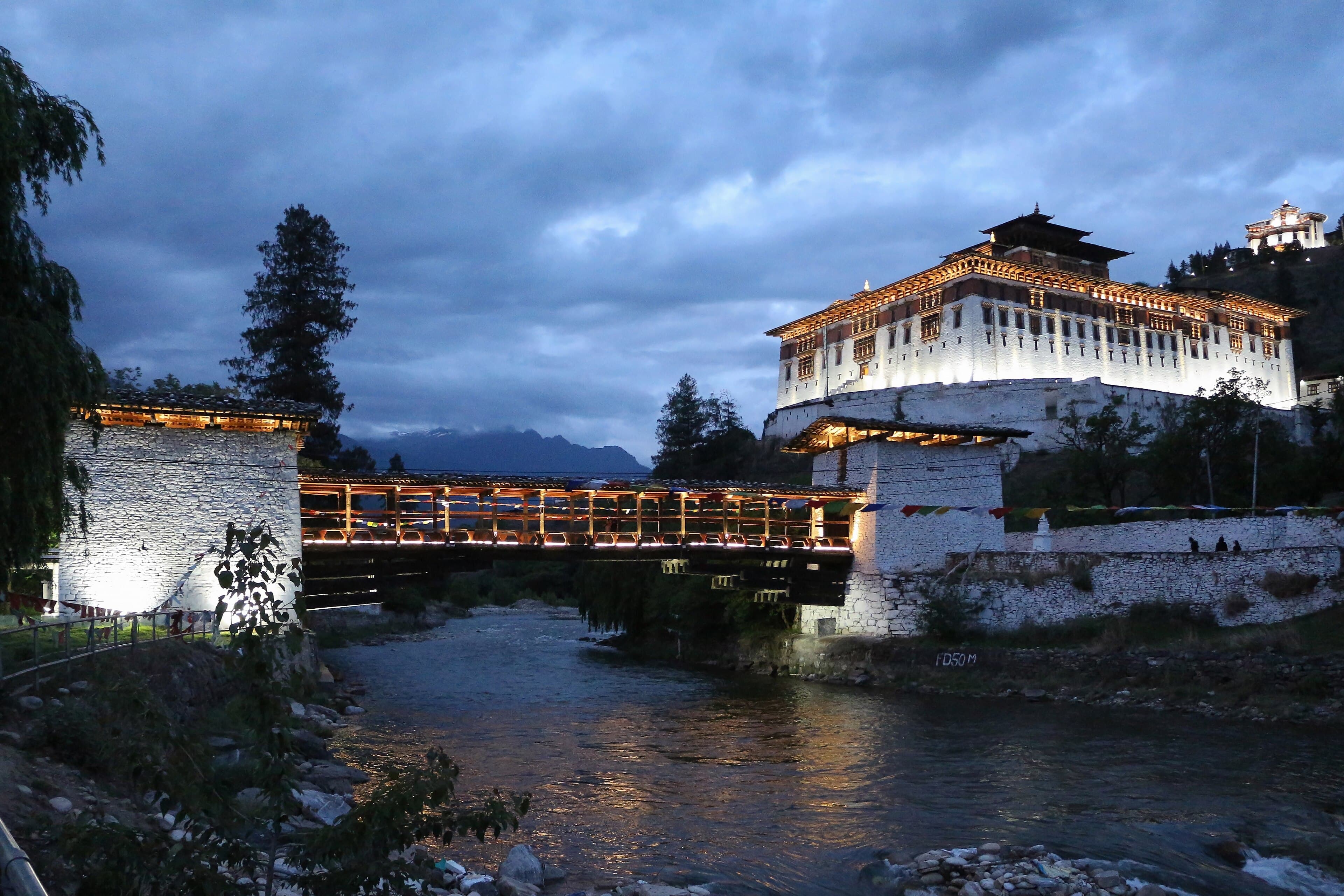
Photo: Rinpung Dzong · B. Gagnon · CC BY-SA 4.0 · Wikimedia Commons Stop 01Paro
Approx. 2,200 mHome to Bhutan’s only international airport, so most rides start here. Rinpung Dzong guards the Paro Chhu, and Taktsang (Tiger’s Nest) clings to the cliffs above the valley.
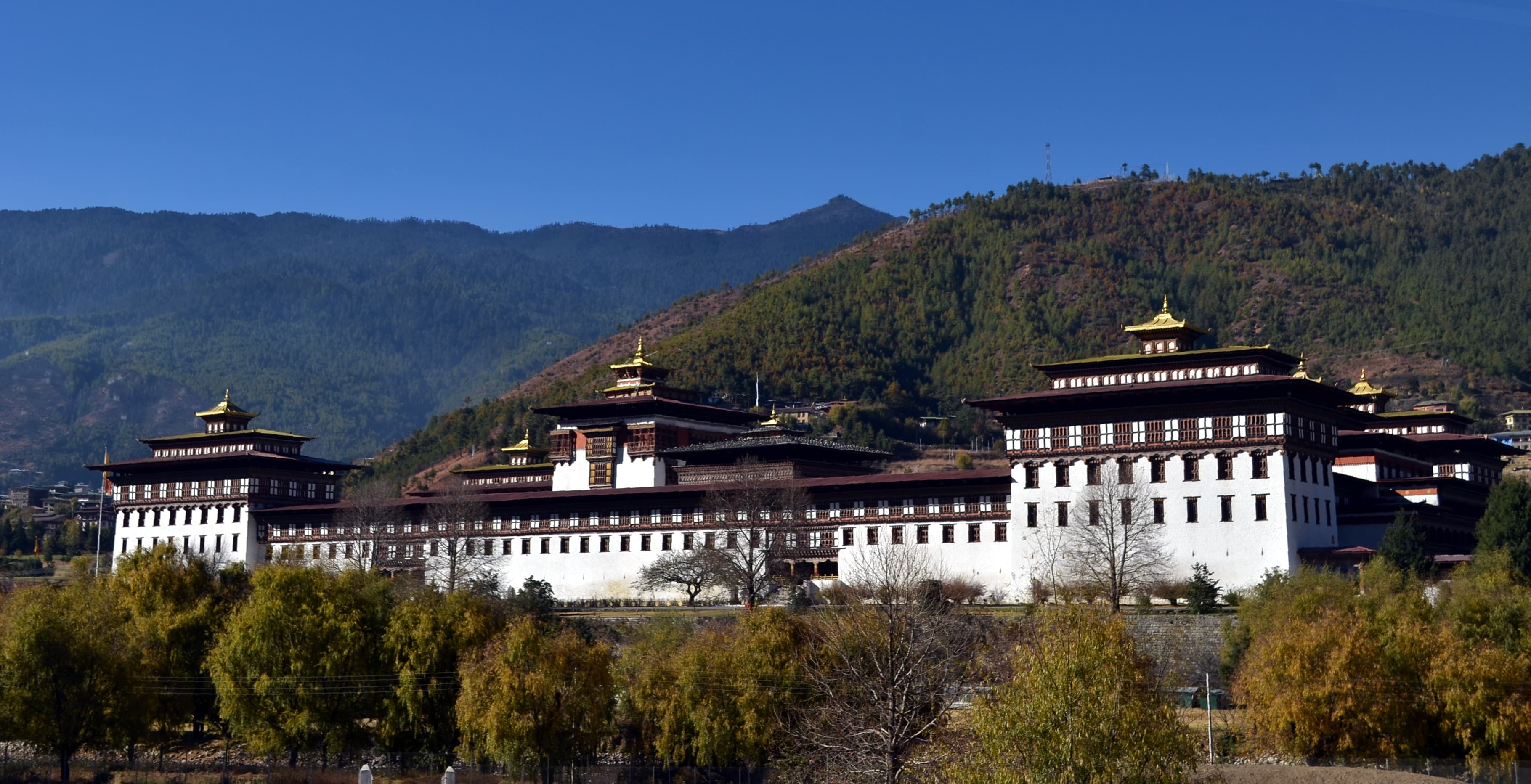
Photo: Tashichho Dzong · C. J. Fynn · CC BY-SA 3.0 · Wikimedia Commons Stop 02Thimphu
Approx. 2,330 mThe capital, and famously without traffic lights. Tashichho Dzong houses the throne room and government offices on the banks of the Wang Chhu.
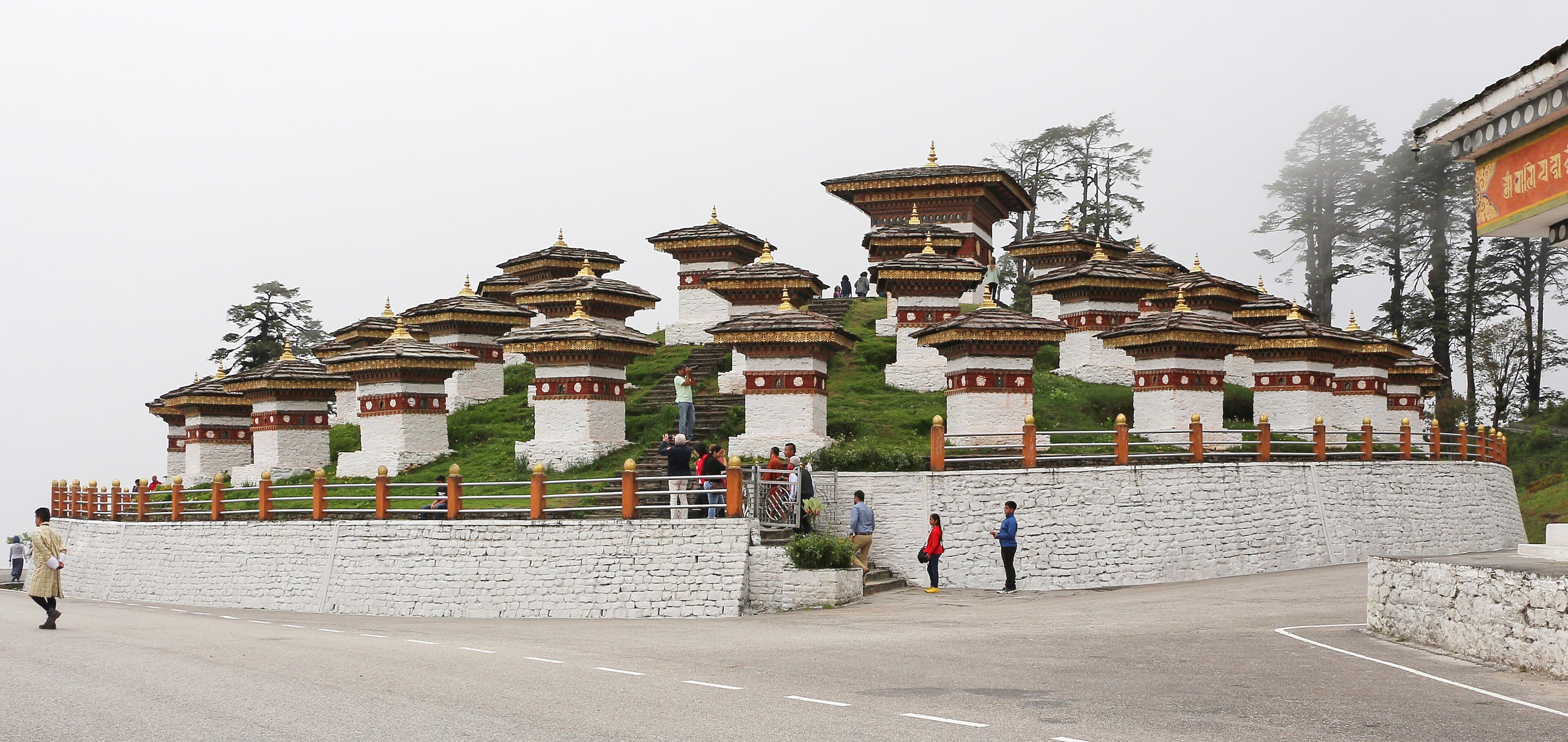
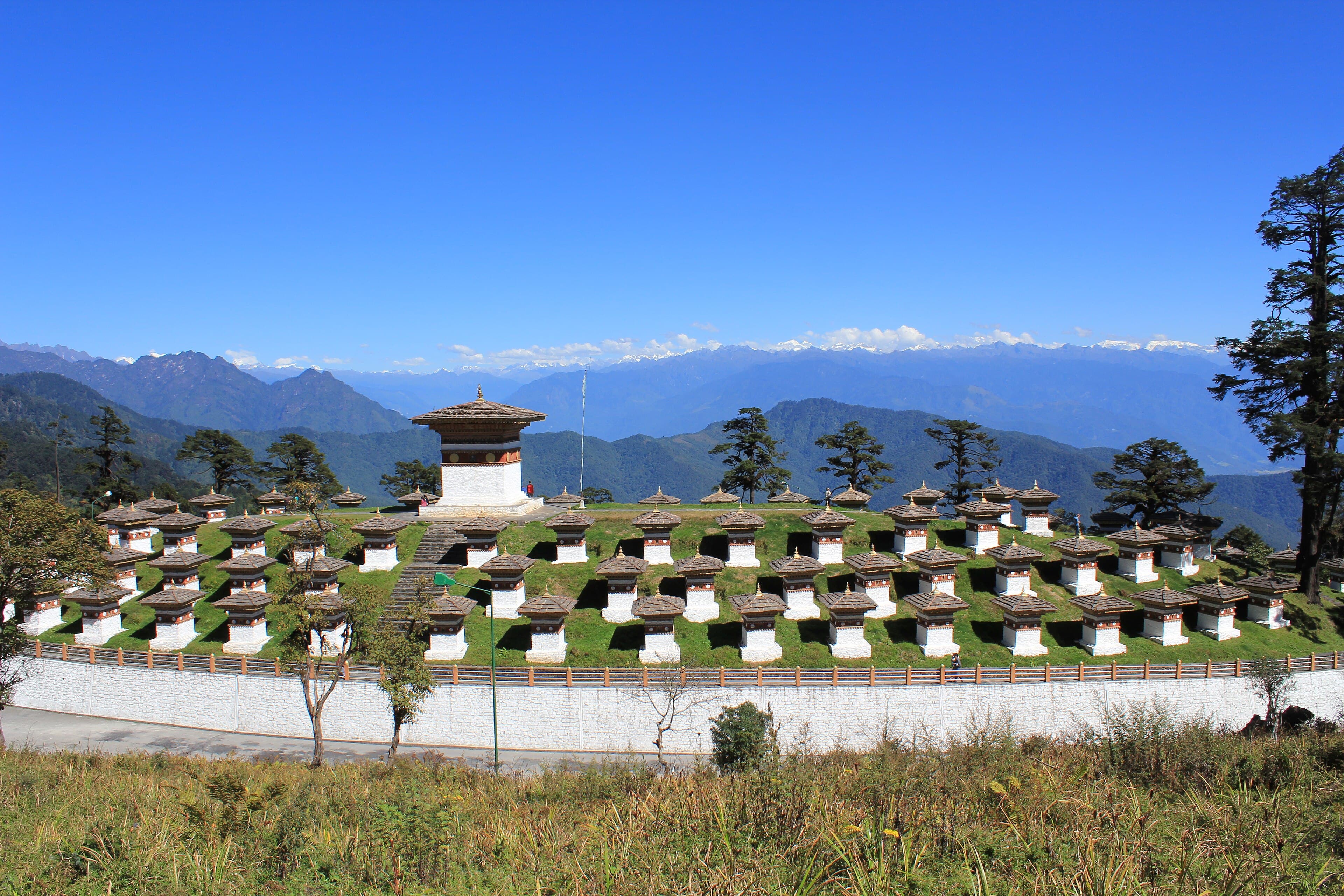
Photo: Druk Wangyal Chortens · B. Gagnon · CC BY-SA 4.0 · Wikimedia Commons Stop 03 · Mountain passDochula
Approx. 3,100 mThe pass between Thimphu and Punakha, crowned by the 108 Druk Wangyal chortens. On clear days the eastern Himalaya lines the horizon.
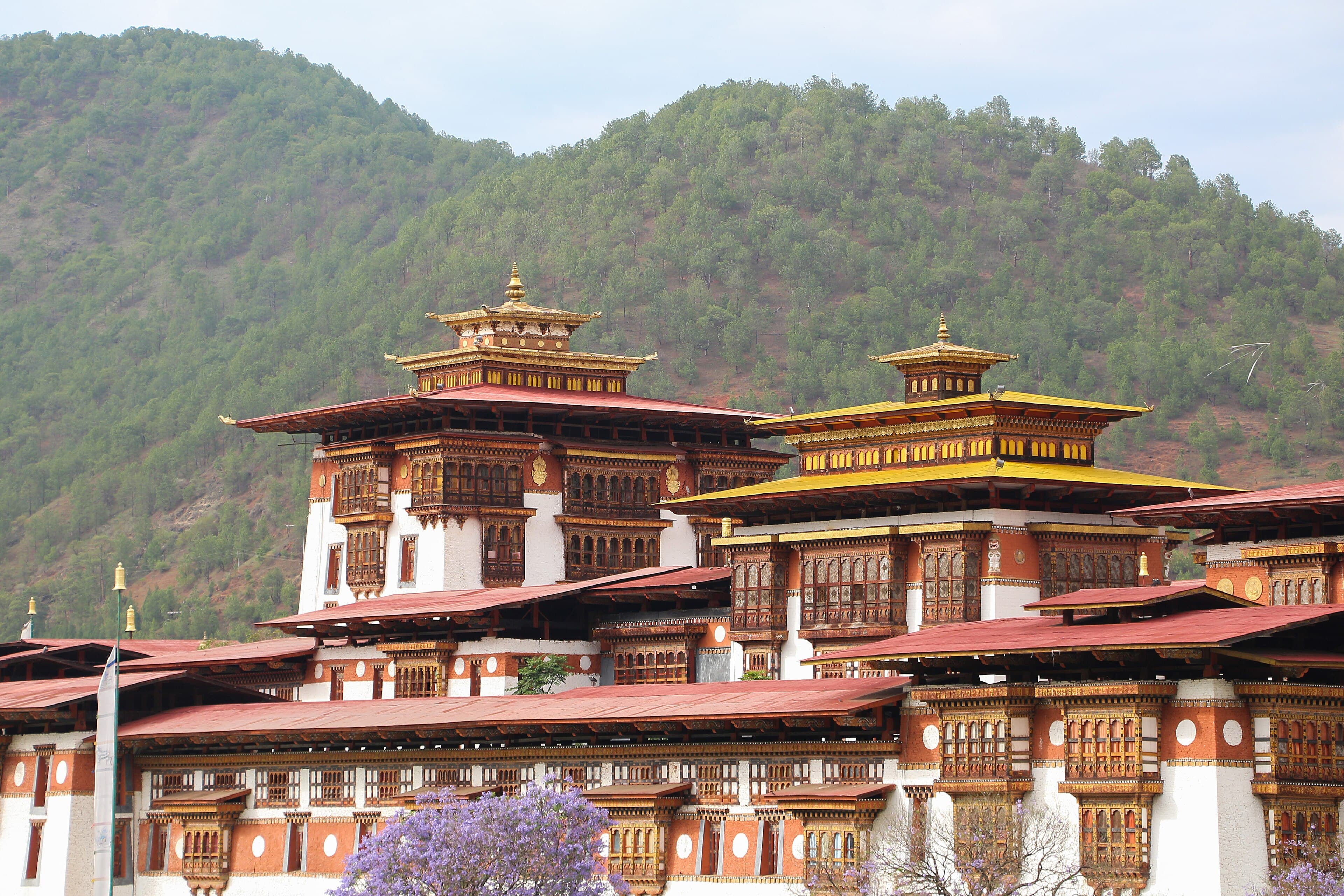
Photo: Punakha Dzong · B. Gagnon · CC BY-SA 4.0 · Wikimedia Commons Stop 04Punakha
Approx. 1,250 mThe former capital, in a warm, low valley. Punakha Dzong sits where the Pho Chhu and Mo Chhu rivers meet, at the bottom of a long descent from Dochula.
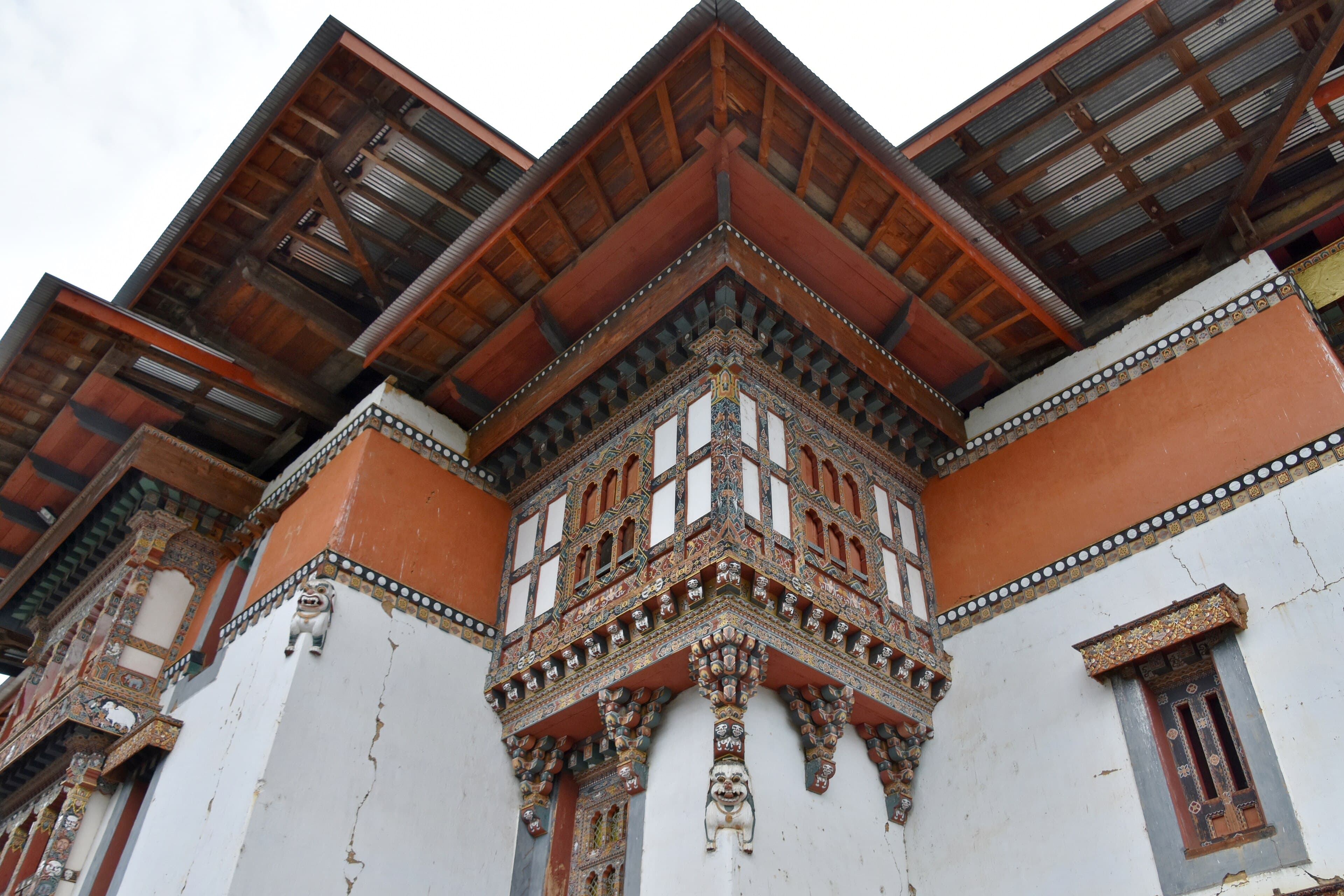
Photo: Gangtey Goemba · Prof. Mortel · CC BY 2.0 · Wikimedia Commons Stop 05Phobjikha
Approx. 2,900 mA wide glacial valley watched over by Gangtey Goemba, and the winter home of endangered black-necked cranes.
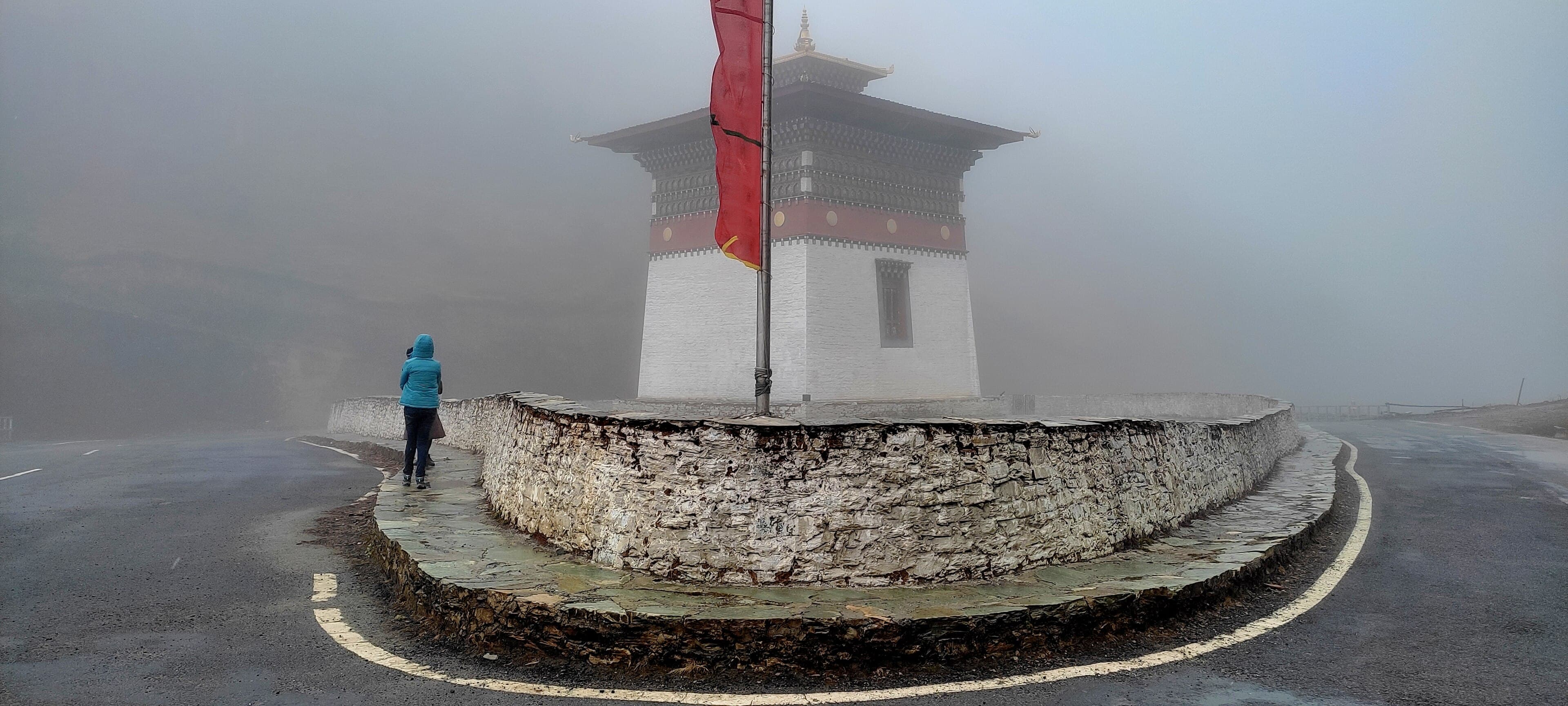
Photo: Chorten at Pele La · RPSkokie · CC BY-SA 4.0 · Wikimedia Commons Stop 06 · Mountain passPele La
Approx. 3,420 mThe crossing of the Black Mountains and the traditional divide between western and central Bhutan. Yak pasture and dwarf bamboo near the top.
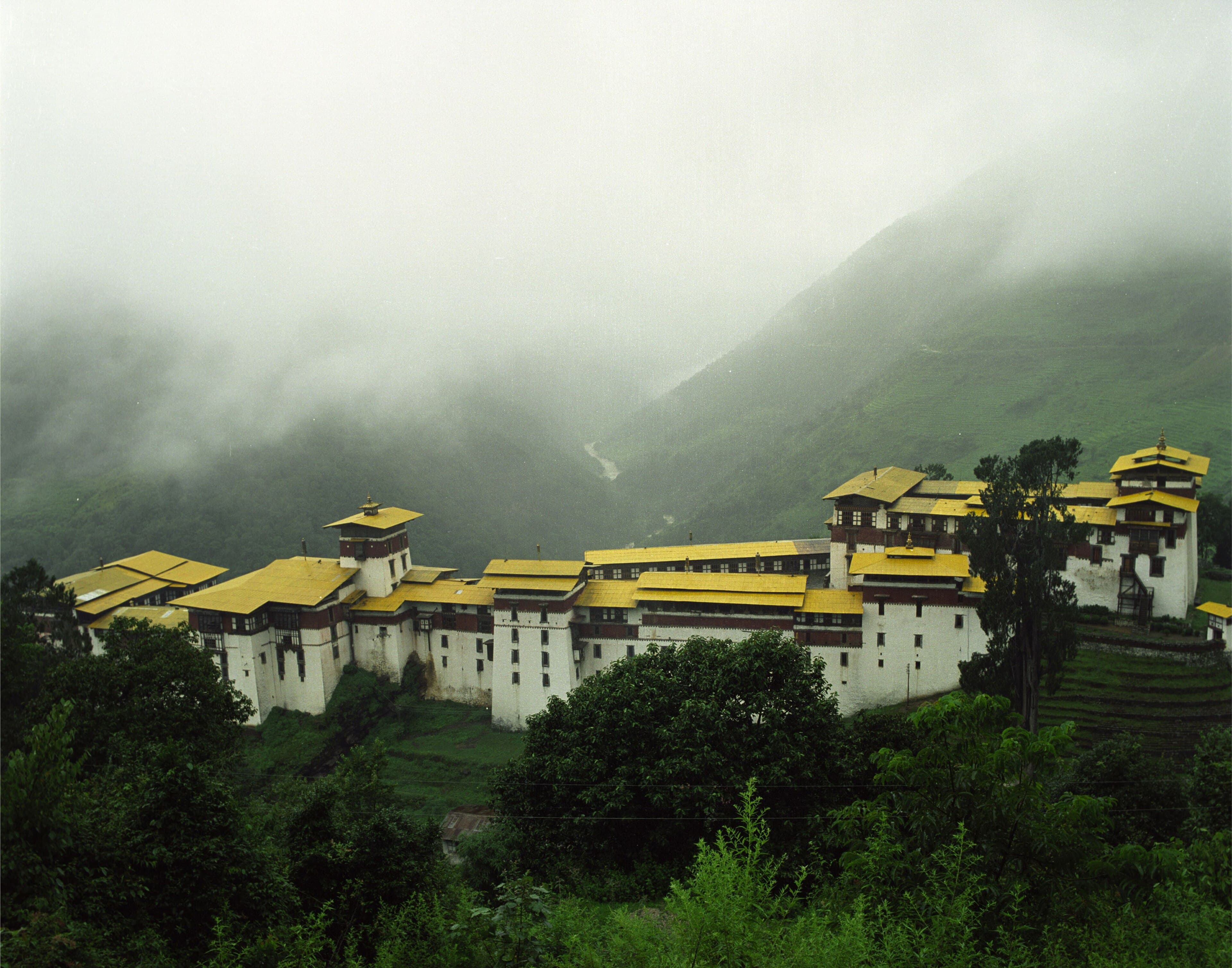
Photo: Trongsa Dzong · C. J. Fynn · CC BY-SA 3.0 · Wikimedia Commons Stop 07Trongsa
Approx. 2,180 mThe ancestral seat of Bhutan’s royal family. Trongsa Dzong spills down a ridge above the Mangde Chhu gorge, and the road reveals it long before you arrive.
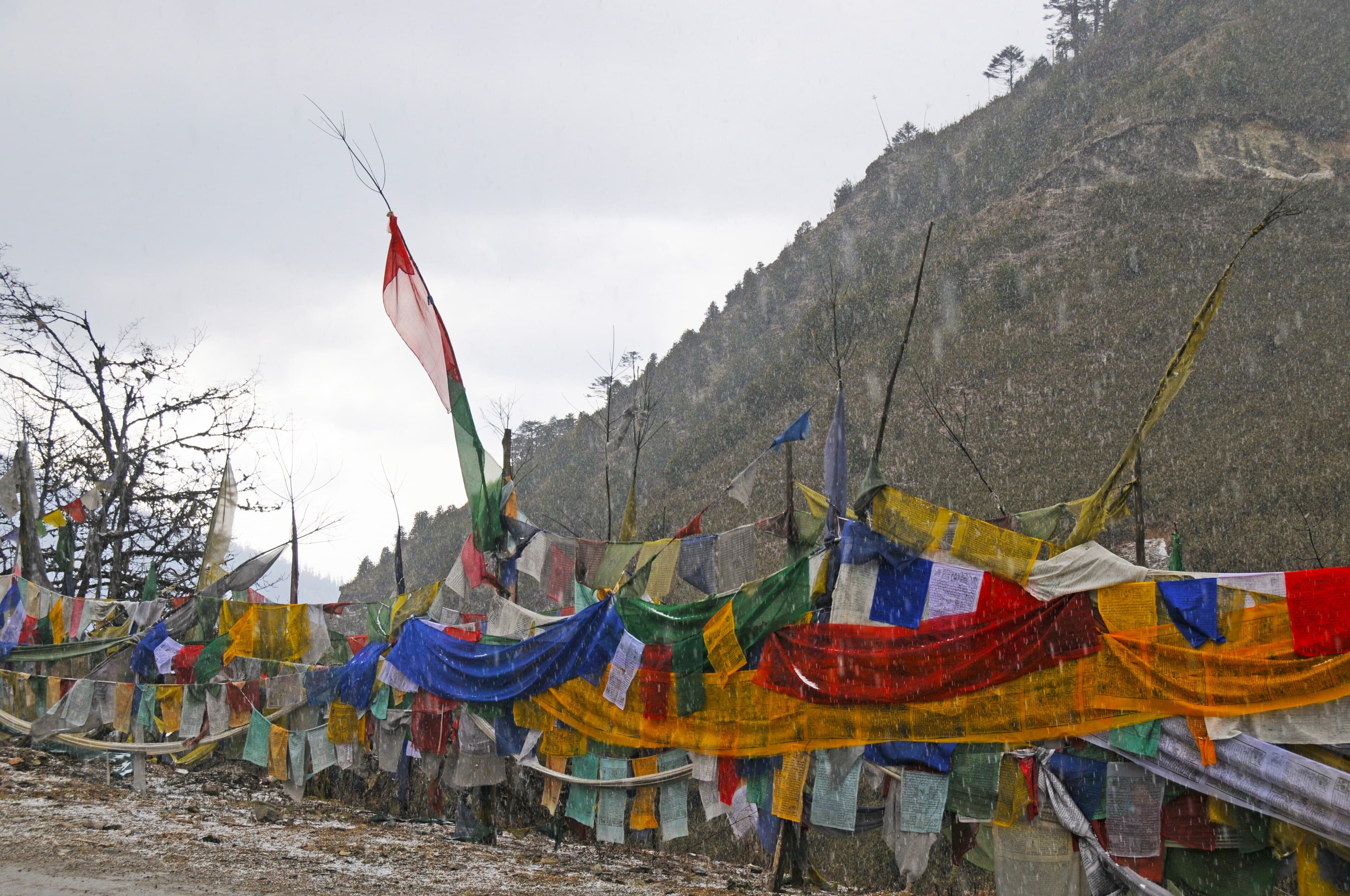
Photo: Stand-in: prayer flags near Pele La · D. Broad · CC BY 3.0 · Wikimedia Commons Stop 08 · Mountain passYotong La
Approx. 3,425 mThe last big climb of the lateral road, between Trongsa and Bumthang, through fir and rhododendron forest.
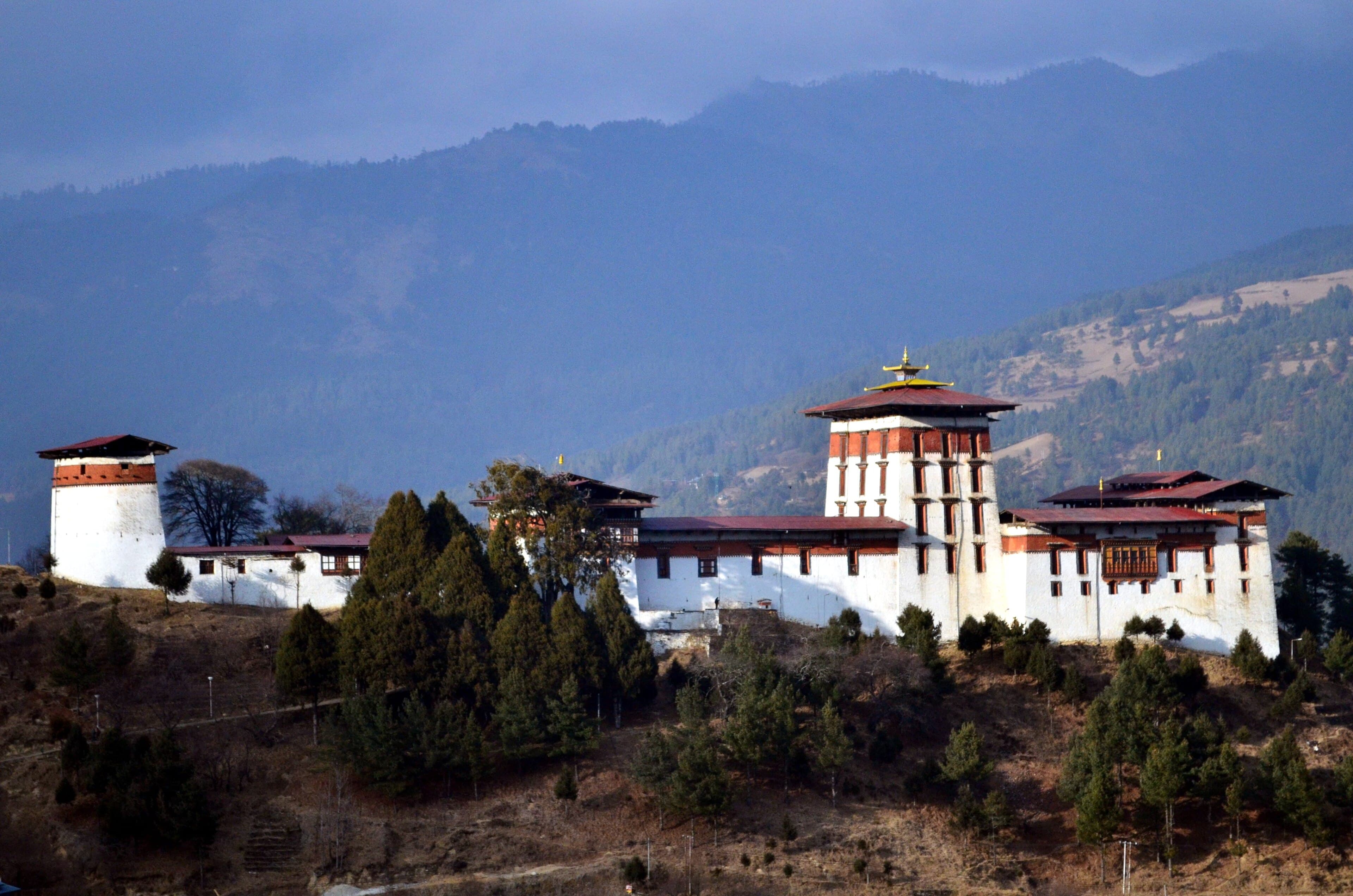
Photo: Jakar Dzong · C. J. Fynn · CC BY-SA 3.0 · Wikimedia Commons Stop 09Bumthang
Approx. 2,600 mBhutan’s spiritual heartland: four valleys holding some of the country’s oldest temples, including Jambay Lhakhang and Kurjey, below Jakar Dzong.
Dates, duration and price
Every departure is quoted individually, based on your dates, group size, riding experience and how many days you want in the saddle. Bhutan’s Sustainable Development Fee is charged per night on top of the tour price.
Plan your ride →Before you ride
Do I need a motorcycle licence to ride in Bhutan?
Yes. You need a valid motorcycle licence from your home country, and an International Driving Permit is strongly recommended. Bring both on the ride.
Can I ride in Bhutan without a guide?
International visitors travel with a licensed Bhutanese guide, and travel beyond Thimphu and Paro needs route permits, which are arranged through your tour operator. Rules can change, so confirm current requirements when you book.
What is the Sustainable Development Fee (SDF)?
Bhutan charges international visitors a Sustainable Development Fee per person, per night. It is US$100 for most nationalities at the time of writing, with a separate rate for Indian nationals. It is set by the Government of Bhutan, not the tour operator, and is payable on top of the tour cost.
When is the best time for a motorcycle tour in Bhutan?
Spring (March to May) and autumn (late September to November) bring the driest roads and the clearest mountain views. The summer monsoon (June to August) brings rain and landslides. Winter rides are possible in the valleys, but high passes can see snow and ice.